Introduction: a bridge between worlds for mental health
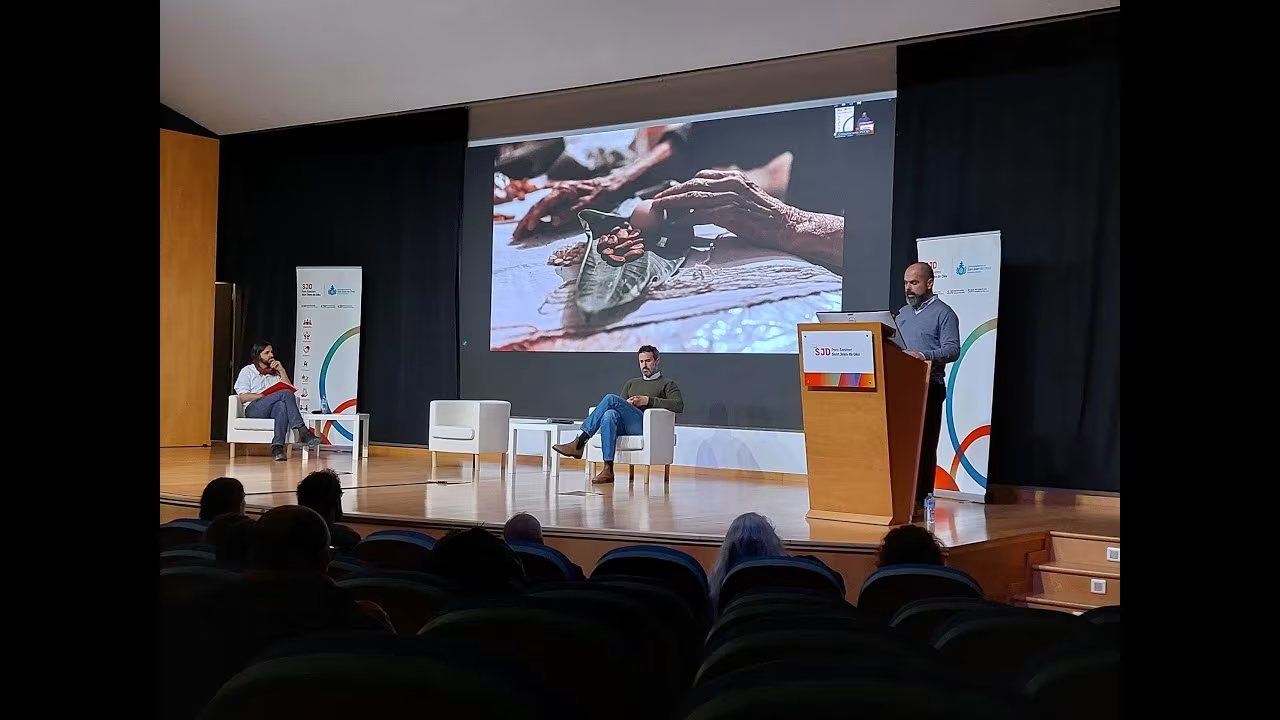
The II Conference of Dialogues between Medicines, held on 14 March 2025 in Sant Boi de Llobregat and organised by the Mental Health Care Service for the Immigrant Population (SATMI) of the Parc Sanitari Sant Joan de Déu, focused on a topic of growing interest and relevance: “The therapeutic use of psilocybin from an intercultural perspective: contemporary clinical research and traditional Mazatec medicine”. 1 The meeting brought together specialists from various fields to explore the possibilities of integrating the ancestral wisdom of Indigenous medicine — specifically the Mazatec practices of Mexico that use psilocybin mushrooms — with advances in clinical research and modern psychiatry. The main aim was to analyse how this intercultural dialogue can enrich and transform current approaches to treating mental disorders, promoting a more holistic and effective vision. The Parc Sanitari Sant Joan de Déu thus positions itself as a pioneering institution in Spain in the research and supervised clinical application of psychedelic medicine.
The heart of the dialogue: Mazatec medicine and contemporary science
One of the central themes of the conference was a deep exploration of the Mazatec worldview in relation to health and mental illness, and its traditional use of psilocybin in ritual and healing contexts. It discussed how these ancestral practices understand psychological suffering and seek healing through experiences that go beyond the purely biological, incorporating spiritual and community dimensions and deep self-knowledge.
This traditional knowledge was put into direct dialogue with contemporary clinical research on psilocybin and other psychedelics. Studies were presented that analyse the neurobiological effects of these substances, such as their ability to induce altered states of consciousness that allow access to deep, repressed emotional material, and their potential to stimulate neuroplasticity – the brain’s capacity to reorganise itself and form new neural connections. This phenomenon is considered key to breaking rigid patterns of thought and behaviour associated with disorders such as depression, anxiety or post-traumatic stress. The conference stressed the importance of not separating neuroscientific study from the ritual aspects and the search for personal meaning that characterise the traditional use of these substances.
Integrative psychiatry: towards a holistic future
The conference advocated a model of integrative psychiatry. It acknowledged that, while biological psychiatry has made important advances (such as reducing stigma and developing useful drugs), it also faces significant limitations, such as a possible over-reliance on medication and the lack of clear biomarkers for many disorders. Against this, psychedelic psychiatry, framed within an integrative approach, offers a paradigm centred on “experiential healing”.
This integrative approach not only considers the supervised therapeutic use of psychedelics but also places strong emphasis on the role of trauma in the development of mental illness. It opens the door to incorporating complementary therapies that work with body and mind, such as EMDR (Eye Movement Desensitisation and Reprocessing) or somatic therapy. It also rethinks the importance of community support and social networks in the recovery process, acknowledging the value that traditional healing methods and the spiritual or meaning-seeking dimensions — often neglected in conventional biomedical models — can bring.
Key conclusions: integration as the key to success
The main conclusion to emerge from the II Conference of Dialogues between Medicines was the pressing need for, and enormous potential of, integrating Indigenous medicine and modern psychiatry in the field of mental health. It highlighted that a truly holistic approach must combine the knowledge of neuroscience with an understanding of the importance of ritual, cultural context and self-knowledge (autoconeixement) in healing processes.
The experts agreed that the future of treating mental disorders could benefit enormously from this synergy. The combination of psychedelics’ ability to enable transformative experiences and promote neuroplasticity, together with appropriate therapeutic support and a framework that respects both scientific evidence and cultural wisdom, is a promising route to revolutionising mental health. The conference served as a crucial space for fostering this necessary dialogue, recognising that respectful collaboration between different forms of knowledge is fundamental to moving towards more complete, humane and effective therapies.
About the video:
The conference was recorded in full, and the video, of more than four hours, is embedded on this page.